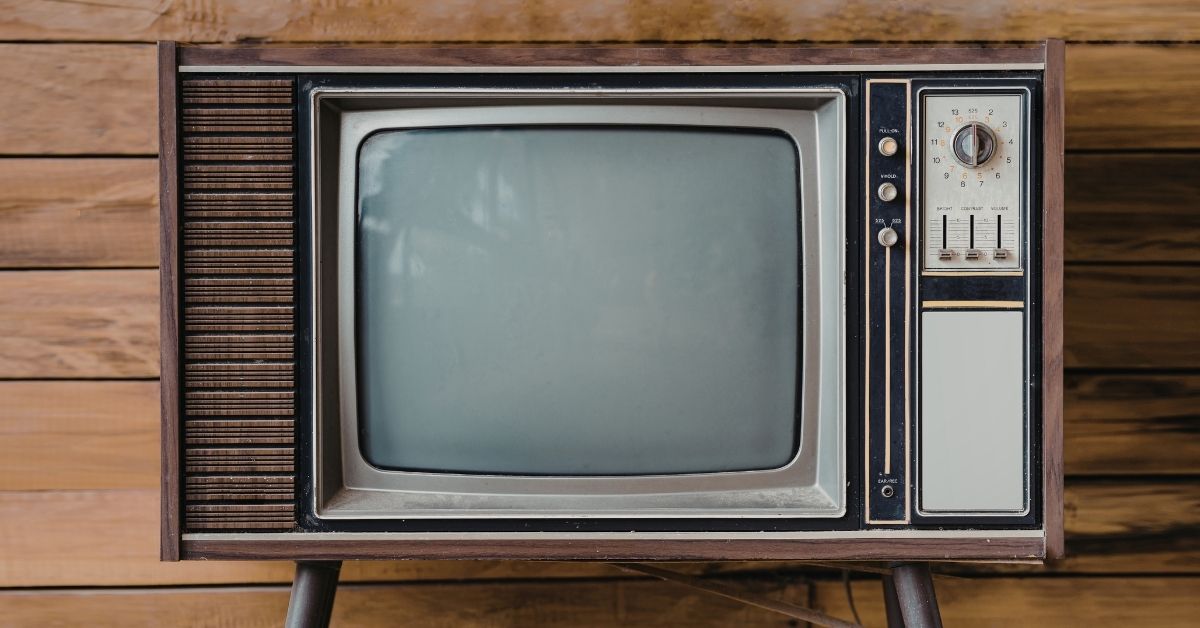
Television grew from many minds, but Philo Farnsworth is widely credited with developing the first fully electronic TV system.
Ask who invented television and you do not get a neat, single name. Television grew step by step, across decades, with different inventors solving different parts of the puzzle. Mechanical scanners, electronic tubes, cameras, picture tubes, broadcast systems and receivers all had to come together before families could sit down in front of a flickering screen.
That is why the story of the inventor of television reads more like a relay race than a solo sprint. Early thinkers such as Paul Nipkow, experimenters such as John Logie Baird and Charles Francis Jenkins, and electronic pioneers such as Philo Farnsworth and Vladimir Zworykin all played a part. To see who deserves credit, you need to see what each person actually built, and when.
Why The Inventor Of Television Is Hard To Pin Down
Schoolbooks sometimes drop one name and move on, yet the real history is messier. Some inventors worked with spinning disks and lights. Others used cathode ray tubes and vacuum electronics. Some built laboratory prototypes that impressed engineers. Others created systems sturdy enough to sell and install in homes.
The phrase “the inventor of television” started to appear in newspapers and patent fights as companies tried to promote their favoured engineer. In legal settings the focus often narrowed to “electronic television,” since mechanical systems soon faded away. Courts in the United States eventually recognised Philo Farnsworth as the central figure behind the first all electronic television system, while historians still point out the earlier groundwork laid by others.
Early Television Inventors And Rival Claims
Before electronic television arrived, several experimenters showed that moving images could travel as electrical signals. Their work prepared the ground for Farnsworth and Zworykin, even if their own systems did not survive in the long run.
| Figure | Type Of Work | Main Contribution To Television |
|---|---|---|
| Paul Nipkow | Mechanical scanning | Patented the Nipkow disk in 1884, a rotating disk with holes that scanned a scene line by line. |
| Boris Rosing | Hybrid systems | Combined a mechanical scanner with a cathode ray tube receiver in demonstrations around 1911. |
| Charles Francis Jenkins | Early broadcasts | Sent silhouette images by radio in the 1920s and ran one of the first experimental television stations. |
| John Logie Baird | Mechanical television | Demonstrated a working mechanical television in 1926 and later ran regular broadcasts in Britain. |
| Philo Farnsworth | Electronic television | Developed the first fully electronic television system using an image dissector camera tube. |
| Vladimir Zworykin | Electronic camera and receiver | Invented the iconoscope camera tube and kinescope picture tube, helping RCA build commercial sets. |
| Major manufacturers | Industrial scaling | Companies such as RCA, GE and others turned laboratory systems into products people could buy. |
Looking at these names side by side shows why the question feels slippery. Nipkow’s disk allowed line scanning. Baird’s demonstrations proved moving pictures could be sent and received in real time. Jenkins pointed toward broadcast services. Rosing and Zworykin helped bring cathode ray tubes into the picture. Then Farnsworth put fully electronic pieces together into a single working chain.
Engineers today usually sort early television work into mechanical and electronic eras. Mechanical systems relied on moving parts and tended to be dim, small and noisy. Electronic systems replaced spinning disks with beams of electrons steered inside sealed glass tubes. That switch allowed higher resolution, higher frame rates and larger screens, which viewers quickly preferred once sets reached shops.
Paul Nipkow And The First Scanning Concept
In 1884, German inventor Paul Nipkow patented an “electric telescope” that used a perforated spinning disk to scan an image into electrical signals. The idea was bold for its time: break a picture into lines, turn each line into a changing signal, send that signal, then rebuild the image in sync somewhere else. Nipkow did not build modern television, yet his disk gave later engineers a starting map.
John Logie Baird And Mechanical Television
Scottish engineer John Logie Baird carried mechanical scanning a long way. In January 1926 he showed invited guests a moving image of a face produced by his “televisor,” using spinning disks on both the camera and the receiver. Within a few years he ran regular experimental broadcasts and even attempted colour and stereoscopic pictures with mechanical means.
Baird’s system had serious limits. The pictures were small, flickering and low in detail, since disks could only spin so fast before shaking apart. Once electronic methods matured, they offered smoother, clearer images without heavy spinning hardware. Even so, many writers in Britain still refer to Baird as television’s inventor, partly because viewers there saw his early public demonstrations.
Philo Farnsworth And The First All Electronic Television System
Philo Taylor Farnsworth grew up on farms in Utah and Idaho. As a teenager he read radio magazines and sketched ideas for scanning images line by line using electric fields instead of spinning disks. According to a Smithsonian article, he had the core concept by age fourteen, inspired by the straight rows of a freshly plowed field.
By the mid 1920s, Farnsworth gained backing from local investors and set up a small laboratory. In 1927 his team transmitted a simple straight line using an “image dissector” tube as the camera, feeding a cathode ray picture tube as the receiver. Over the next few years he improved the system, transmitted more complex images and filed patents that covered the main pieces of an all electronic television chain.
Encyclopaedia Britannica notes that Farnsworth “developed the first all-electronic television system,” which meant that both camera and receiver used vacuum tubes instead of mechanical parts. This step matters because electronic scanning could reach far higher resolution and frame rates than any disk based approach. Once that standard took hold, every later black and white and colour tube television followed the same basic pattern.
Patent Battles And Legal Recognition
Farnsworth’s inventions caught the attention of the Radio Corporation of America (RCA), which had hired Vladimir Zworykin to work on its own electronic television system. RCA tried to argue that Zworykin’s earlier patent filings outranked Farnsworth’s. Long courtroom battles followed during the 1930s, as both sides brought in drawings, lab notes and witnesses.
In the end, U.S. patent courts sided with Farnsworth on core claims, and in 1939 RCA agreed to pay him royalties for using his patents in their commercial television products. One British court even referred to him as the “undisputed inventor of television,” a phrase that later writers sometimes quote without the legal context.
Vladimir Zworykin, RCA And Mass Market Television
While Farnsworth pushed ahead in a small private lab, Vladimir Zworykin worked inside major firms such as Westinghouse and later RCA. Trained in Russia and France, he specialised in cathode ray devices. In the early 1920s he filed patents for television systems using an all electronic “iconoscope” camera tube.
During the 1930s Zworykin and his RCA team refined both camera tubes and picture tubes, while RCA’s manufacturing arm prepared sets for broadcast demonstrations. By 1939, when RCA showed off television at the New York World’s Fair, the system drew on both Zworykin’s tube designs and Farnsworth’s core patents. That blend of ideas shows how television moved from individual sketches to a commercial service.
Zworykin’s name appears often in technical literature because his iconoscope and later image orthicon tubes set patterns for professional cameras for many years. From a legal and historical angle, though, the courts gave priority on basic electronic television concepts to Farnsworth, while still recognising earlier work by Nipkow, Rosing and Baird.
How A Phrase About Television’s Inventor Entered Popular Speech
Once electronic television reached living rooms in the late 1940s and 1950s, magazine writers wanted a simple story to tell. The phrase “the inventor of television” became a handy label for human interest pieces, while engineers knew the history was shared.
Sometimes journalists used the term for Baird, especially in British stories that looked back to his 1926 demonstrations. In other pieces, especially in the United States, Philo Farnsworth carried the tag, helped by later interviews where he spoke about replacing mechanical disks with fully electronic scanning. From time to time advocates for Jenkins or Zworykin use the same phrase.
Over the years, that lower case phrase has taken on a looser meaning. Instead of a strict legal title, it often works as shorthand for whoever a writer sees as the central figure in a longer story about competing designs and companies.
Timeline Of Major Television Milestones
To see the shared nature of the work, it helps to line up a few major events in order.
| Year | Event | Effect On Television |
|---|---|---|
| 1884 | Paul Nipkow patents the scanning disk. | Shows that pictures can be broken into lines and rebuilt from signals. |
| 1911 | Boris Rosing shows a system using a cathode ray tube receiver. | Hints that electronic picture tubes can display broadcast images. |
| 1926 | John Logie Baird demonstrates mechanical television in London. | Gives the public a first glimpse of live transmitted pictures. |
| 1927 | Farnsworth’s lab sends an image using an electronic camera tube. | Proves that fully electronic television works in practice. |
| Early 1930s | Zworykin refines the iconoscope camera tube at RCA. | Makes electronic cameras more reliable for studio use. |
| 1939 | RCA agrees to pay Farnsworth royalties and shows TV at the World’s Fair. | Marks the start of large scale commercial television in the U.S. |
| Late 1940s–1950s | Television sets spread through homes in North America and Europe. | Turns television from lab project into a common household medium. |
So Who Deserves Credit For Television?
When someone asks “who first invented television,” the fairest short answer is that no single person did it alone. Mechanical experimenters showed that moving images could be scanned and transmitted. Hybrid systems mixed mechanical scanning and electronic display. Electronic pioneers then replaced the mechanical pieces entirely.
If you narrow the question to “who invented all electronic television,” historians and reference works usually point to Philo Farnsworth, whose patents and 1927 demonstrations match that description and were upheld in court. If you widen the question again, you also have to credit Nipkow’s scanning concept, Baird’s public shows, Jenkins’s broadcasts and Zworykin’s tube designs.
For students and curious readers, the story of the inventor of television offers a clear lesson: large technical systems nearly always rest on a chain of ideas. One person draws a disk on paper. Another wires a crude working model. Another swaps mechanical parts for electronic tubes. Others reduce costs and ship products by the million. Television reached living rooms only because all of those steps lined up over time.
So while headlines may still talk about a single television inventor in the singular, the history behind that phrase belongs to a group of determined experimenters spread across several countries and several decades.