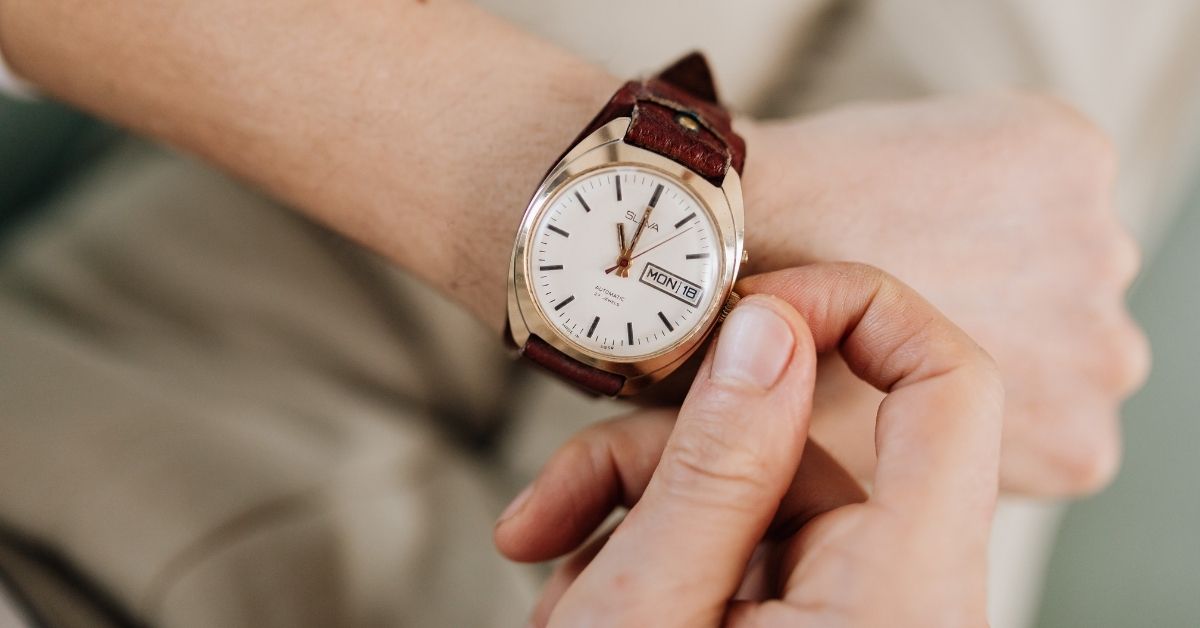
In timekeeping, “pm” means post meridiem, covering local time from 12:00 noon to 11:59 at night.
Searches like “what does pm mean time?” usually pop up when a digital clock, online form, or school timetable shows a time with the little letters “am” or “pm” beside it. If you’re not sure what pm stands for, or exactly which hours fall under pm time, this guide walks through the meaning step by step so you can read any schedule with confidence.
What Does Pm Mean Time? Basic Definition
The letters “pm” come from the Latin phrase “post meridiem.” That phrase translates to “after midday” or “after noon.” On a 12 hour clock, pm labels the hours that follow noon and run through the late evening. The matching term “am” comes from “ante meridiem,” which means “before midday.”
So, when you see 3:00 pm on a clock, you’re looking at a time that lands three hours after noon. When you see 9:15 pm, it points to a time late in the evening. Both sit in the block of hours marked as pm time.
The 24 hour clock expresses the same idea with numbers from 13:00 through 23:59. Many computers and official systems use that style, while daily speech in English often sticks with am and pm labels.
| 12 Hour Time (Pm) | 24 Hour Time | Typical Description |
|---|---|---|
| 12:00 pm | 12:00 | Noon or midday |
| 1:00 pm | 13:00 | Early afternoon |
| 3:30 pm | 15:30 | Middle of the afternoon |
| 5:00 pm | 17:00 | Late afternoon or early evening |
| 7:45 pm | 19:45 | Evening |
| 9:00 pm | 21:00 | Nighttime for many daily routines |
| 11:59 pm | 23:59 | One minute before midnight |
What Does Pm Mean In Time Format For Students
Schools, online courses, and exam boards often use pm time when they publish lesson plans and test schedules. When a timetable shows “Math 2:15 pm,” that lesson starts at fifteen minutes past two in the afternoon. When a notice lists “Exam closes 9:00 pm,” it means you must finish the test by nine at night.
In written English, pm can appear as “pm,” “p.m.,” or “PM.” All three spellings point to the same idea. Style guides differ on which version they prefer, so you’ll see a mix. Digital displays sometimes shorten the label even further to a single “P.” The core meaning stays the same in each case.
Difference Between Am And Pm On A Clock
The pair “am” and “pm” splits the day into two blocks of twelve hours. The first block starts at midnight and runs through the morning. The second block starts at noon and runs through late evening until just before the next midnight.
A short version looks like this:
- am covers times from 12:00 midnight up to 11:59 in the morning.
- pm covers times from 12:00 noon up to 11:59 at night.
One detail causes confusion: the labels 12:00 am and 12:00 pm. Official bodies such as the U.S. National Institute of Standards and Technology point out that noon is neither before nor after itself, so the tags “am” and “pm” do not fit that exact moment very well. Many style guides suggest using “12 noon” and “12 midnight” for that reason, or times like 11:59 pm and 12:01 am to make schedules clearer.
Outside those edge cases, the split between am and pm stays simple. Times before midday take the am label, and times after midday take the pm label.
Reading Pm Time On Different Devices
Once you know what pm means, the next step is reading pm time on the devices you use every day. Phones, laptops, watches, and classroom clocks all present pm hours in slightly different ways, yet the basic pattern stays consistent.
Digital Clocks And Phone Screens
Most phones and tablets let you pick either a 12 hour view with am and pm labels or a 24 hour view that runs from 00:00 to 23:59. In a 12 hour setting, the screen usually shows a number from 1 to 12, then a colon, then the minutes, followed by am or pm in small letters.
So, a home screen that reads 7:05 pm tells you that it’s seven minutes past seven in the evening. A lock screen that reads 12:45 pm tells you that lunchtime has passed and the early afternoon has started.
Analog Clocks And Classroom Timetables
Analog clocks use hour and minute hands instead of digital digits. The clock face only shows numbers from 1 to 12, so it doesn’t show am or pm directly. You figure out whether a time sits in the am or pm block by context.
Printed timetables often include the letters am or pm after each time. When they do not, the heading of the table or the surrounding text usually clarifies the range of hours. A chart titled “Afternoon Sessions” will usually refer to pm hours even if each row simply lists “1:30,” “2:15,” and so on.
Pm Time In Everyday Life Examples
Working through a few everyday situations makes the meaning of pm time stick. Here are scenes that many students and workers meet during a normal week.
Study Sessions And Homework
Many learners do homework after classes finish. If a planner lists “Study block 4:00 pm to 5:30 pm,” the block starts in the late afternoon and ends early in the evening. If you see “Group project call 8:00 pm,” everyone should join the online call at eight at night.
When schedules cross time zones, pm labels still point to hours after midday in each local place. A virtual meeting set for 7:00 pm in Berlin and 6:00 pm in London still lands in the pm block for both sides, even though the clock readings differ by an hour.
Work Shifts And Public Timetables
Part time jobs often run on pm hours. A shop might list “Shift: 5:00 pm–9:30 pm,” which places the whole shift in the late afternoon and evening. Bus, train, or cinema timetables use the same idea, such as a departure at 7:20 pm or a screening at 10:15 pm.
Public information sites sometimes combine am and pm labels with 24 hour conversions to avoid confusion. Time education pages on trusted sites such as NIST time of day FAQs and timeanddate am and pm guides explain this pattern with charts and diagrams that match the pm times you see on daily timetables.
Common Mistakes With Pm Time
Even people who use pm time every day can trip over a few common traps. Knowing these issues helps you read and write times in a clear way when exams, travel, or work shifts sit on the line.
Mixing Up Noon, Midnight, And Pm Labels
The single most frequent mistake links to the moment right at noon and the moment right at midnight. Some clocks show noon as 12:00 pm, others show it as 12:00, and some schedules just say “12 noon.” Midnight brings similar mix ups, with 12:00 am, 12:00, or “12 midnight” all in use.
Standards bodies advise writers to avoid 12:00 am and 12:00 pm when they need exact wording. In many cases, they suggest using “12 noon,” “12 midnight,” or ranges such as 11:59 pm–12:01 am. For daily life, the main habit to build is reading the full text around a time and thinking about whether the writer meant midday or the middle of the night.
Forgetting Time Zone Shifts
Another trap appears when you match pm hours across time zones. A time set for 7:00 pm in one city may line up with 8:00 pm or 6:00 pm in another. The pm label stays the same because both readings fall after midday, yet the exact hour on the clock changes.
Online tools that convert time zones use either 24 hour notation or clear am and pm labels for each city. When you copy a meeting time into your planner, always copy the time zone as well so that 7:00 pm in one place does not slide into the wrong slot elsewhere.
| Situation | Risk With Pm Time | Safer Wording |
|---|---|---|
| Scheduling right at noon | Readers debate whether 12:00 pm means noon or midnight | Write “12 noon” or “12:00 midday” |
| Scheduling right at midnight | Readers misread the date or the side of midnight | Write “11:59 pm” or “12:01 am” with a date |
| International online meetings | Participants join an hour early or late | Show time zone and 24 hour version |
| Printed posters with small text | am or pm label gets missed at a glance | Use larger type or phrases like “evening show” |
| Assignments due at “midnight” | Students upload work on the wrong calendar day | Write “11:59 pm on Friday” or “00:00 Saturday” |
| Travel tickets | Confusion between morning and evening departures | Print am or pm plus 24 hour conversion |
| Medical or lab bookings | Patients arrive at the wrong half of the day | Spell out morning, afternoon, or evening |
Pm Time In Different Countries And Systems
The meaning of pm time stays the same from place to place, yet not every country uses am and pm labels in daily speech. Many English speaking countries rely on a 12 hour clock, while many other regions prefer a 24 hour clock.
International standards bodies publish rules for writing times in a way that works across borders. ISO 8601, such as, describes a 24 hour clock format that drops am and pm entirely. Coordinated Universal Time, or UTC, follows that pattern and forms the base for time zone conversions worldwide.
As a learner, this means you may see both formats in textbooks or exam instructions. When you see a 24 hour reading like 16:00, subtracting 12 from the hour value gives you 4:00 pm.
Study Tips For Remembering Pm Time
The phrase “pm time meaning” becomes easier to handle once you link pm to everyday images and simple memory tricks. Here are a few ideas that help pm meaning stick.
Link Pm To The Sun And Your Daily Routine
One easy way to remember pm is to connect it to the point when the sun has passed its highest spot in the sky. After lunch, shadows grow longer and afternoon lessons or work shifts roll on. That whole block of hours, right through evening meals and late night study sessions, fits under the pm label.
Use Simple Word Hooks
Another memory aid is a short phrase that links pm to “post” or “past” midday. Some learners like the hook “pm means past midday.” Others prefer “pm means post noon.” Say the phrase out loud a few times and write it at the top of your planner. Before long, pm will always bring “after noon” to mind.
Quick Recap Of Pm Meaning
Pm stands for “post meridiem,” a Latin phrase that means “after midday.” On a 12 hour clock, pm covers times from 12:00 noon through 11:59 at night. On a 24 hour scale, the same hours run from 12:00 to 23:59. Once you link those ranges to your daily routine and to simple word hooks, questions like “what does pm mean time?” stop being puzzles and start feeling like basic reading of any clock you meet.